MUSEUM
DESIGNMUSEUM DANMARK WELCOMES NEW KNOWLEDGE CENTRE
At the beginning of 2026, Designmuseum Denmark broke ground on a new Knowledge Centre, which will bring together the museum’s library, reading room, and design workshop under one roof. The vision for a dedicated knowledge centre at the museum dates back 100 years and is now being realised thanks to generous support from the VILLUM Foundation, the Augustinus Foundation, and the C.L. David Foundation and Collection. The award-winning architectural studio Praksis will be responsible for sensitively integrating the new building into the unique architectural setting of Frederiksstaden.
The Knowledge Centre is expected to open in summer 2027.
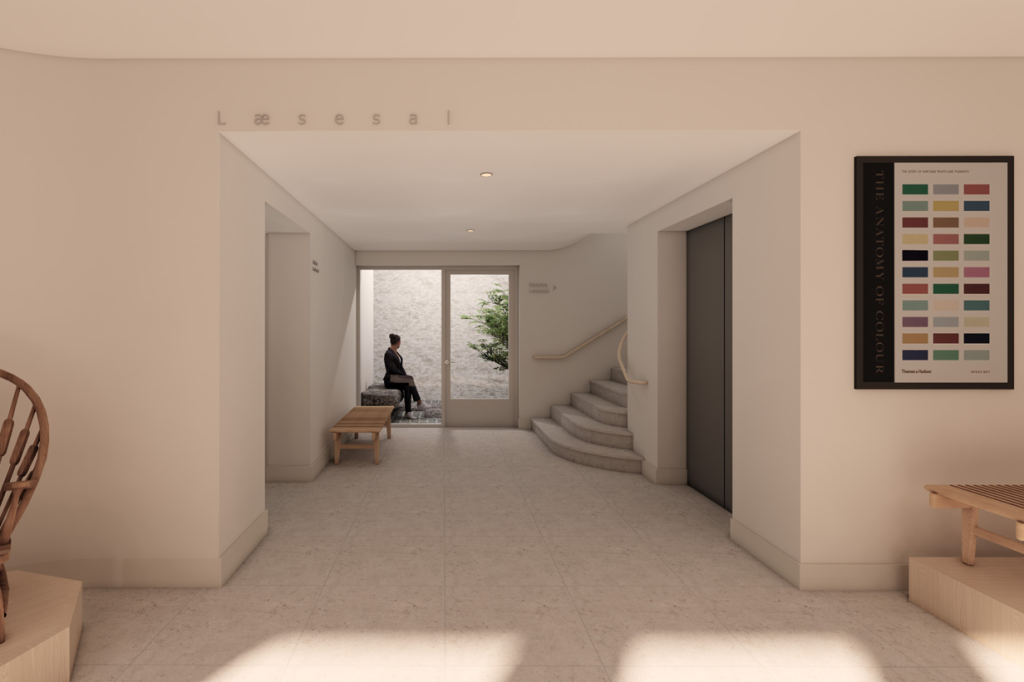
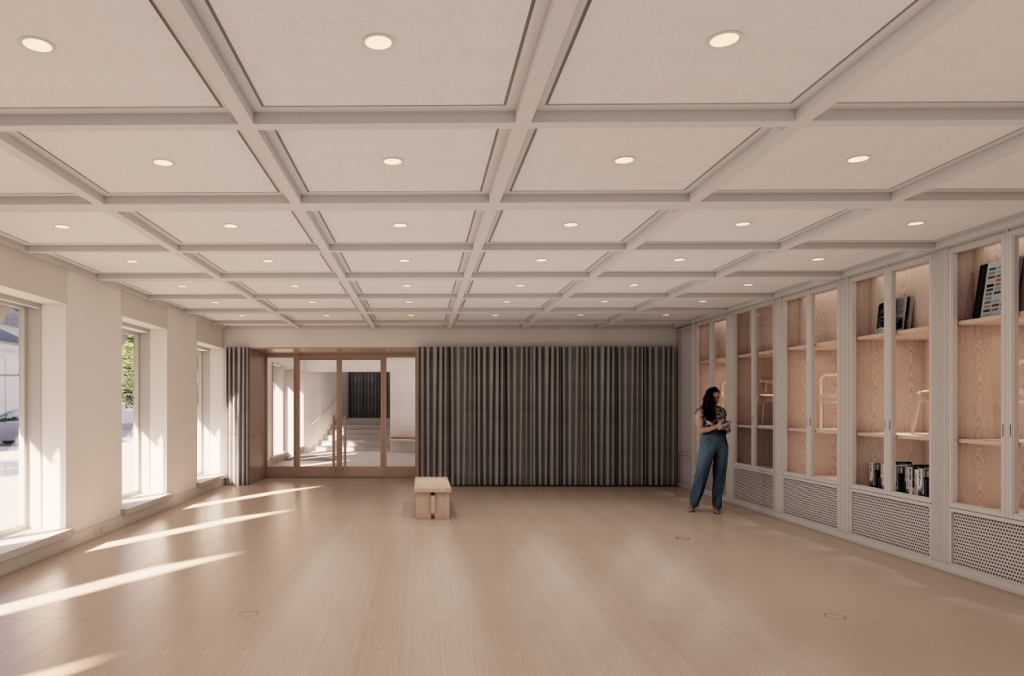
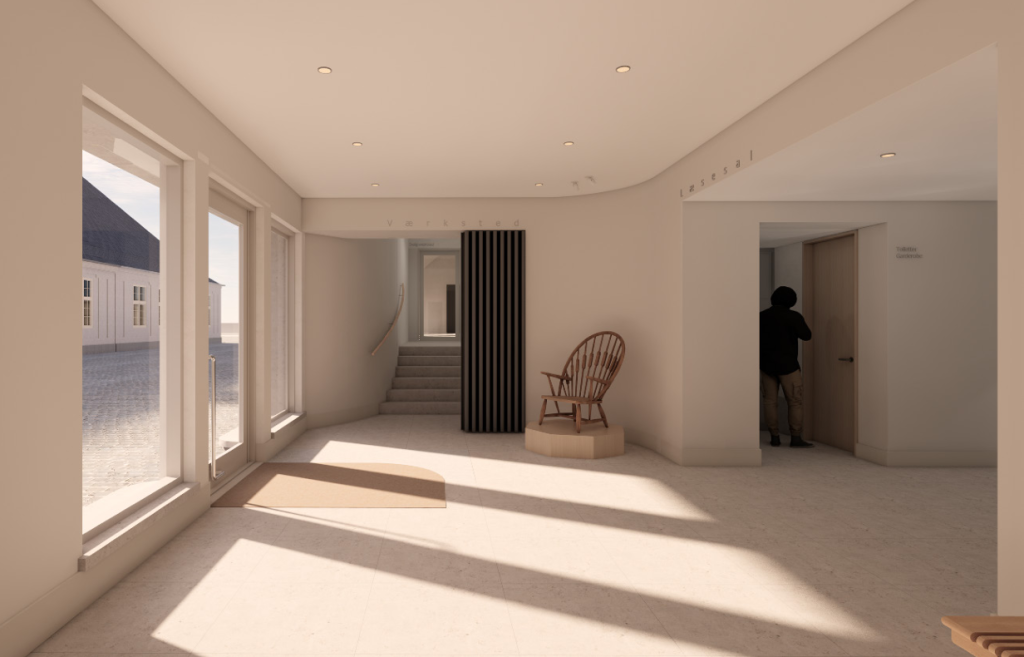
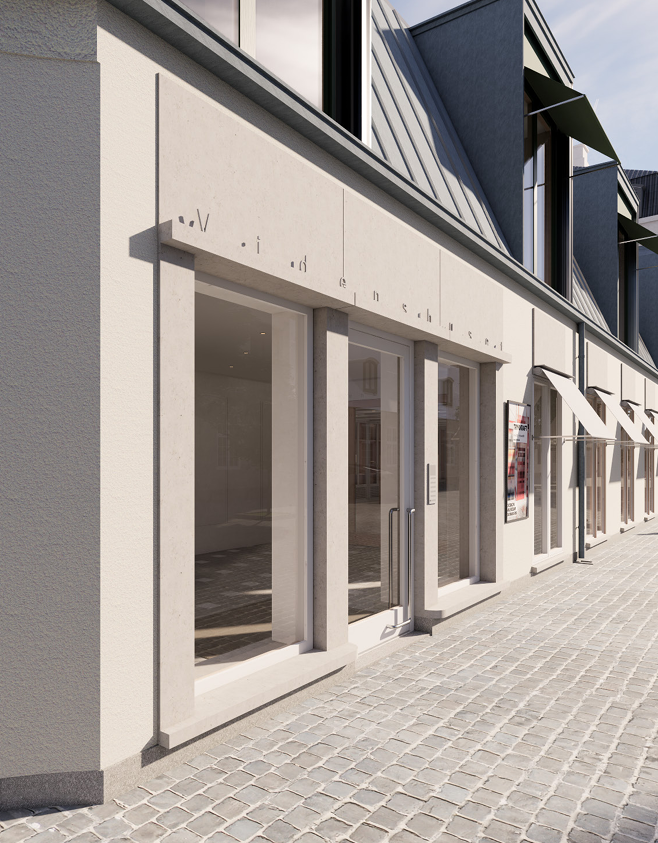
Since 1926, Designmuseum Danmark has been housed in one of Copenhagen’s finest Rococo buildings: the former Royal Frederiks Hospital. In the early 1920s, the renowned architect Kaare Klint designed the museum and articulated a vision for a learning wing to the north of the main building, which is now – over 100 years later – being realised with support from the Villum Foundation, the Augustinus Foundation, and the C.L. Davids Foundation and Collection, which together have contributed 50 million Danish kroner to the project. Anne-Louise Sommer, Director of Designmuseum Danmark, shares her thoughts on the project:
“We are incredibly grateful for the generous support, which means we can create a vibrant and accessible learning hub that frames and enables lifelong learning and education in design, crafts, and artistry. A laboratory where there is space for the intersection of world-class research and learning environments, where new ideas are developed and tested – to the benefit of our visitors.”
Jens Kann-Rasmussen, Chairman of the Board of the Villum Foundation, which also donated the museum’s design workshop, inaugurated in 2012, adds:
“At the Villum Foundation, we are pleased to support the creation of the Knowledge Centre, which brings together research, education, and the dissemination of Danish design history under one roof. It is our shared history, and it is important that it is preserved and used for the benefit of current and future generations. And when the Knowledge Centre also considers both the museum’s history and architecture, as well as sustainability in the construction, there is much to look forward to.”
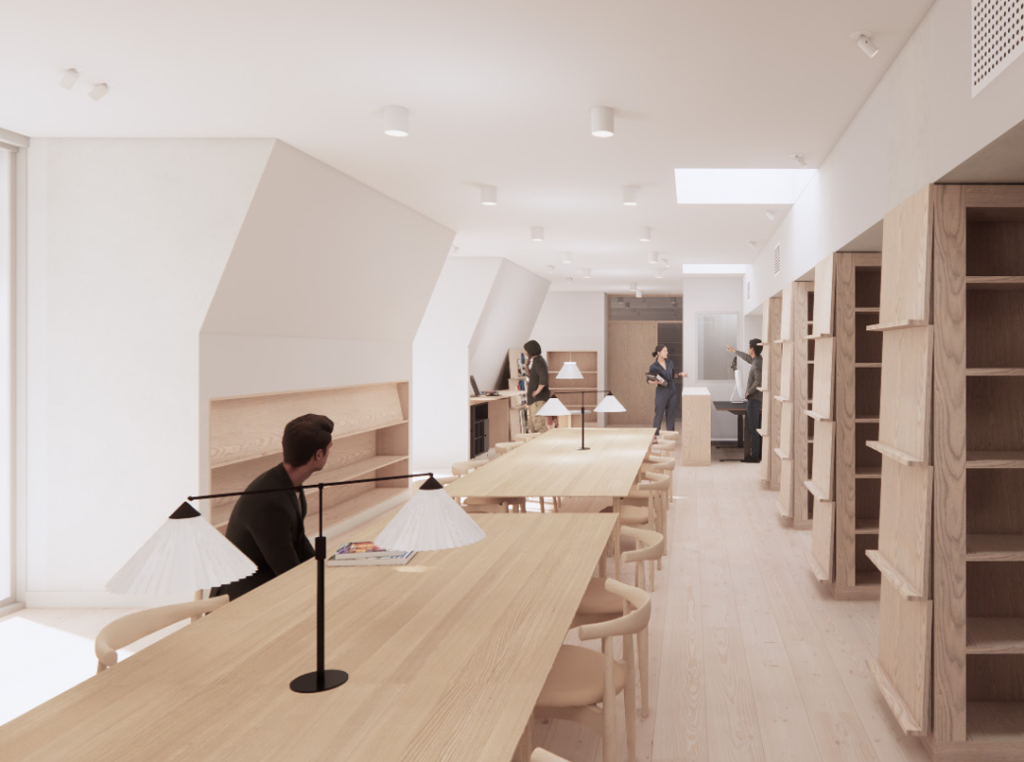
A SPACE FOR DESIGN-RELATED EXCHANGE
The Knowledge Centre will house the museum’s library, reading and study rooms, as well as its design workshop, creating space for learning, study facilities, and open workshop environments with a high level of accessibility—including outside the museum’s regular opening hours. A multi-purpose hall will accommodate lectures, design debates, film screenings, seminars, conferences, industry events, and pop-up exhibitions—creating a unique space for professional exchange within the field of design. The existing design workshop will be preserved and integrated into the new building.
On the perspectives of the upcoming Knowledge Centre, Museum Director Anne-Louise Sommer says:
“Designmuseum Danmark is much more than a museum. Our library, which serves as a national specialist and research library and is also used by international researchers, is an incredibly important resource—not only for our own professional staff, but also for design researchers, as well as practicing designers and craftspeople. We would like to share this wealth of knowledge on design and craft—past and present—more widely, so that it can benefit a broader audience. Design is a significant part of Danish cultural heritage, and knowledge of it is important for everyone. We often speak about lifelong learning, from the very youngest to the oldest generations, and I envision the Knowledge Centre as a vibrant, dynamic, and welcoming place that invites everyone to take part in this dialogue. Curiosity should be encouraged, and we look forward to sharing our resources and knowledge of design culture in the broadest sense with all who are interested.”
VIABILITY AND RESPECT FOR THE SPIRIT OF THE PLACE
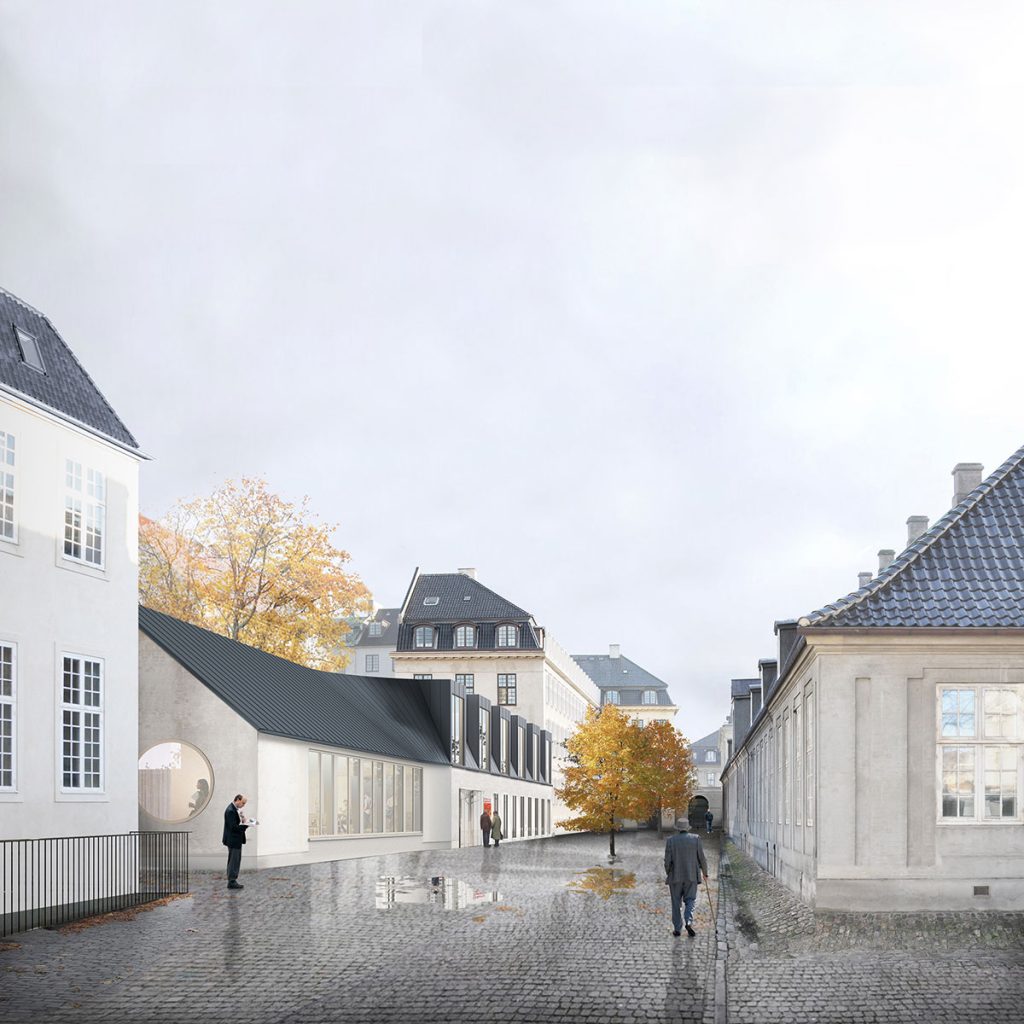
The new building has been designed by Praksis, an acclaimed and award-winning architectural studio known for its ability to integrate contemporary architecture into historic surroundings with both sensitivity and character. The new Knowledge Centre will be carefully integrated into the distinctive architectural setting of Frederiksstaden, continuing the spirit of the site through a contemporary expression.
Mette Tony, partner at Praksis, states:
“We are so pleased to have been entrusted with this exciting task. Adding a new building to Frederiksstaden is a particularly delicate challenge, where it’s essential to be attentive; it’s about sensitively integrating the new building into the city’s unique character. The fact that the Knowledge Centre will be so outward-facing and publicly accessible as a new part of Designmuseum Danmark is absolutely the right approach for the site.”
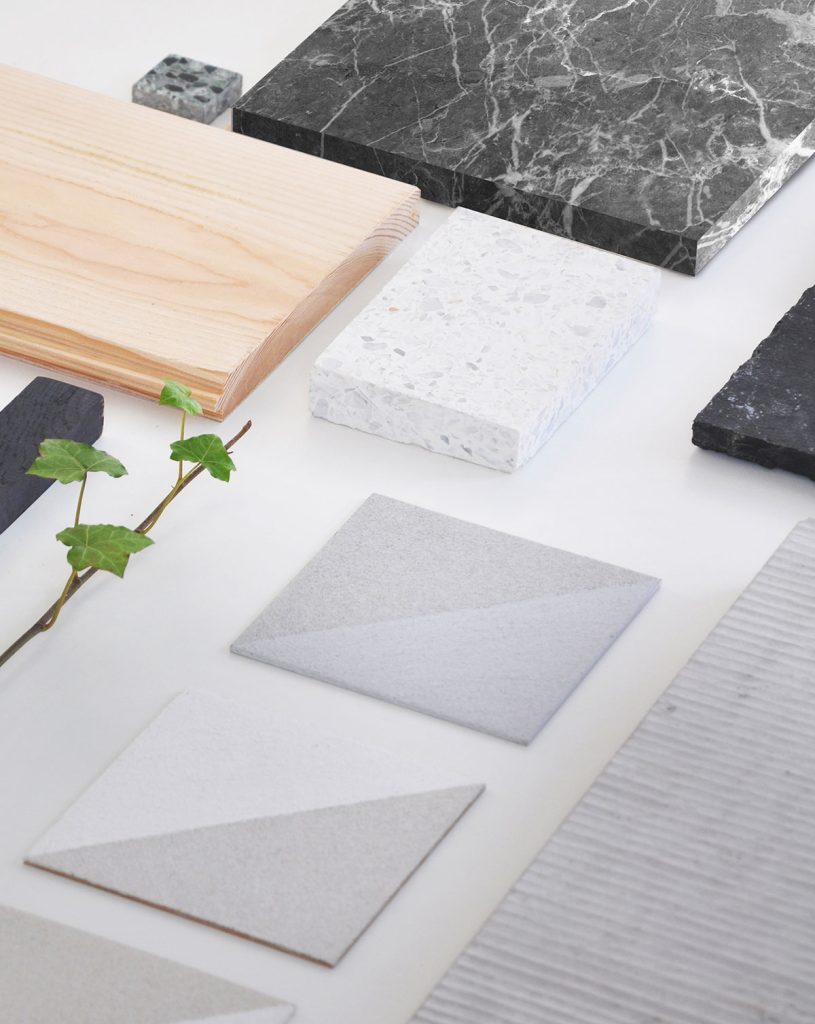
Construction methods and materials are central to the forthcoming building project, particularly when it comes to respecting the history of the site, its users and its surroundings. An LCA (Life Cycle Assessment) is a statutory calculation that measures the building’s total climate impact and CO₂ emissions throughout its entire lifespan – and this assessment documents that the Knowledge Centre is being built within the permitted limits for climate impact.
Among the materials used for the Knowledge Centre are Wienerberger clay blocks, which are used in low-energy buildings. The blocks provide such effective insulation in themselves that the building’s external walls do not require additional insulation. Clay blocks of this kind have been used in buildings across Europe for decades but are far less common in Denmark.
A VISION BECOMES REALITY
With the realisation of the House of Design Knowledge, the building transformation initiated in 2012–2014 is brought to completion. During this period, the listed museum building received a new roof, and the process was further advanced with a comprehensive restoration carried out between 2020 and 2022. However, the vision for a Knowledge Centre dates back 100 years. As Museum Director Anne-Louise Sommer explains:
“We have sketches from Kaare Klint’s transformation of the former hospital in the early 1920s, showing a wing running along the museum’s north side—precisely where we are now constructing the House of Design Knowledge. This was intended to house the specialist library, which was the central cornerstone of the museum’s knowledge-building activities. Since the museum’s founding in 1890, it has been essential that we operate as a fully integrated ABM institution, bringing Archive, Library, and Museum together under one roof.”
And what is the current status of the project in spring 2026? The Museum Director continues:
“We have now broken ground and are preparing the construction site so that the structure of the House of Design Knowledge can be erected in late summer. This is an important phase, but also a relatively invisible one, as it mainly involves preparatory work such as technical installations and foundations. A visit to the site will therefore reveal the contractors’ preparatory activities, as well as archaeologists currently collecting samples and materials for further study, helping us better understand the recent past. A perimeter foundation has come to light, outlining a long, narrow building, which we believe may be a remnant of one of the successive structures belonging to the Royal Frederik’s Hospital. All of this is now being examined and documented.”